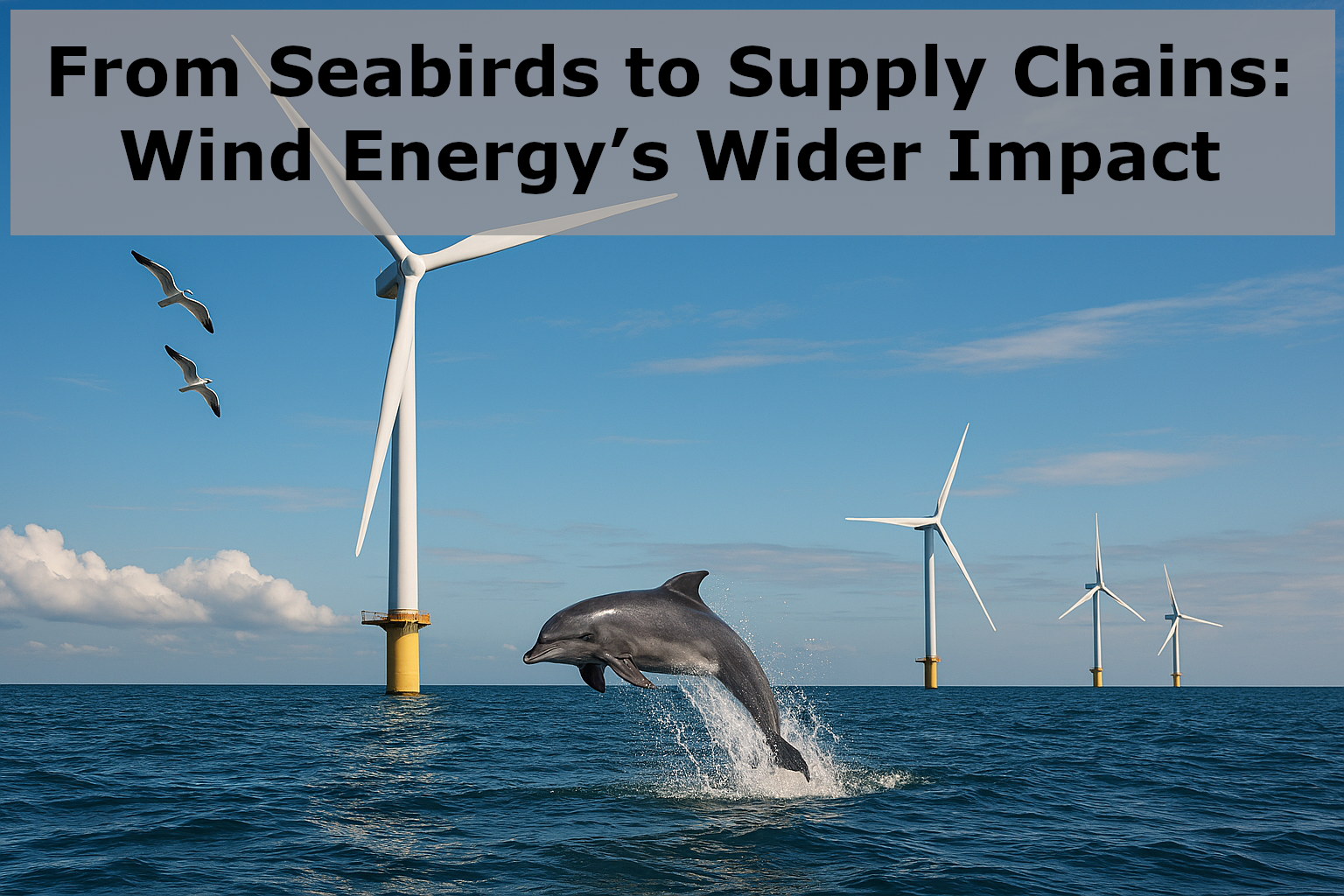
Offshore windfarms are proving to be unexpected heroes in marine conservation. Far from just generating clean electricity, these towering turbines are creating protected sanctuaries where fish stocks replenish, seabirds feed undisturbed, and marine mammals find safer waters.
The government's new Marine Recovery Fund formalizes this connection between renewable energy and ocean recovery, turning environmental obligations into collective investments that accelerate both clean energy deployment and biodiversity protection.
🌊 Marine Recovery Key Facts
- 19 GW of offshore wind unlocked through the Marine Recovery Fund
- Enough power for two cities the size of London
- Accidental sanctuaries where fishing activity is restricted around turbines
- 50 GW target by 2030 including 5 GW floating wind capacity
- 42% renewable electricity currently generated in the UK
- Marginal pricing system keeps bills tied to gas prices despite renewable growth
🏗️ Protected Areas Around Windfarms: Accidental Ocean Sanctuaries
Offshore windfarms are not just energy assets they are increasingly becoming safe havens for marine life. Around the UK, exclusion zones and protected areas surrounding turbines have reduced harmful activities such as trawling and dredging, creating pockets of recovery where ecosystems can regenerate.
How Windfarm Exclusion Zones Work
The infrastructure requirements of offshore wind create natural protection zones that benefit marine biodiversity in multiple ways:
🚫 Fishing Restrictions
- Trawling exclusion: Large nets cannot operate safely around turbine foundations
- Dredging prohibition: Seabed disturbance minimized to protect cable infrastructure
- Commercial vessel limits: Reduced shipping traffic through windfarm areas
- Seasonal protections: Additional restrictions during breeding seasons
- Buffer zones: Safety margins create extended protected areas
🐟 Ecosystem Recovery
- Seabed restoration: Reduced disturbance allows habitat regeneration
- Fish stock recovery: Nursery areas protected from overfishing pressure
- Food chain benefits: Increased prey availability supports higher predators
- Biodiversity hotspots: Turbine foundations create artificial reefs
- Migration corridors: Protected routes for mobile species
Evidence of Recovery Success
Evidence from existing windfarm sites demonstrates measurable biodiversity improvements where industrial disturbance has been reduced:
- Fish abundance: Studies show increased fish populations within windfarm boundaries
- Seabird feeding: Reduced boat disturbance creates calmer waters for diving species
- Benthic communities: Seabed organisms recover when trawling pressure is removed
- Marine mammals: Dolphins and porpoises benefit from quieter underwater environments
- Spawning grounds: Critical breeding areas receive protection during development
Nature Recovery Network Integration
The government is now positioning windfarms as part of a wider nature recovery network, not just energy infrastructure:
- Connectivity planning: Windfarms designed to link existing marine protected areas
- Habitat corridors: Migration routes protected across multiple sites
- Ecosystem services: Recognition of biodiversity benefits alongside energy generation
- Adaptive management: Monitoring and adjustment based on wildlife responses
- Multiple benefits: Climate action and nature recovery delivered together
💰 The Marine Recovery Fund: Collective Investment in Ocean Health
To formalize the link between energy and ecology, the government has launched the Marine Recovery Fund. Instead of each developer negotiating bespoke compensatory measures, companies can contribute to a central, government operated pot that delivers large scale conservation projects.
Fund Structure and Operation
The Marine Recovery Fund represents a policy innovation that streamlines environmental compensation while ensuring meaningful conservation outcomes:
🎯 Purpose and Scope
- Large scale projects: Deliver meaningful restoration beyond individual site mitigation
- Scientific targeting: Projects designed based on ecosystem evidence and priorities
- Habitat restoration: Focus on seabird colonies, fish nurseries, and marine mammal areas
- Species protection: Targeted support for vulnerable marine wildlife
- Ecosystem connectivity: Create linked networks of protected marine areas
⚡ Business Efficiency
- Predictable costs: Developers know environmental contribution requirements upfront
- Faster approvals: Streamlined consent process with standardized compensation
- Reduced bureaucracy: Single fund eliminates multiple individual negotiations
- Certainty delivery: Government guarantees environmental outcomes are achieved
- Investment confidence: Clear framework supports renewable energy finance
Pooled Resources, Better Outcomes
Pooling environmental contributions creates opportunities for more ambitious conservation than individual developer projects could achieve:
- Scale advantages: Large projects more cost effective than multiple small interventions
- Duplication avoidance: Coordinated approach prevents overlapping efforts
- Expert management: Centralized expertise ensures best practice implementation
- Long-term commitment: Government backing provides sustainable funding
- Measurable impact: Clear metrics and monitoring for conservation success
Immediate Unlock: 19 GW of Clean Energy
The Marine Recovery Fund will unlock up to 19 GW of offshore wind in the immediate term:
📊 Energy Scale and Impact
- 19 GW capacity: Equivalent to powering two cities the size of London
- Immediate deployment: Projects ready to proceed with environmental certainty
- 2030 contribution: Significant progress toward 50 GW offshore wind target
- Energy security: Reduced dependence on volatile fossil fuel imports
- Economic benefits: Job creation and supply chain development
🐋 Britain's Seas: Extraordinary Wildlife Under Pressure
Britain's seas are home to extraordinary wildlife, from the seabirds that crowd its cliffs to the shoals of fish, dolphins, and porpoises that inhabit its waters. Yet many habitats remain fragile after decades of overfishing, pollution, and climate stress.
Marine Biodiversity Richness
UK waters support remarkable diversity that many people don't realize exists around our coastline:
🐦 Seabirds and Coastal Species
- Puffins: Iconic species facing climate and food supply pressures
- Gannets: Spectacular diving seabirds requiring clean, fish-rich waters
- Terns: Migratory species dependent on coastal breeding sites
- Guillemots and razorbills: Cliff nesting species sensitive to disturbance
- Storm petrels: Ocean wanderers that nest on remote islands
🐟 Fish and Marine Life
- Cod and herring: Commercial species recovering from historical overfishing
- Bass and mackerel: Important both commercially and ecologically
- Flatfish: Plaice, sole, and flounder using shallow waters as nurseries
- Sharks and rays: Often overlooked predators including dogfish and skates
- Shellfish: Crabs, lobsters, and scallops supporting coastal communities
🐋 Marine Mammals
- Harbor porpoises: Most common cetacean in UK waters
- Bottlenose dolphins: Intelligent predators supporting eco-tourism
- Common dolphins: Highly social species often seen in large groups
- Minke whales: Seasonal visitors following fish migrations
- Grey and harbor seals: Recovering populations supporting ecosystem health
Conservation Challenges and Pressures
Despite this biodiversity richness, many species face continuing pressures that the Marine Recovery Fund aims to address:
- Overfishing legacy: Decades of intensive fishing have depleted many fish stocks
- Habitat degradation: Trawling and dredging damage seabed communities
- Climate change: Warming waters alter food chains and species distributions
- Pollution: Plastics, chemicals, and noise pollution affect marine life
- Invasive species: Non-native predators threaten seabird colonies and native ecosystems
Marine Recovery Fund Restoration Targets
The fund will target specific conservation priorities based on scientific evidence:
- Seabird colony protection: Remove invasive predators and restore breeding habitats
- Fish nursery restoration: Protect and enhance areas where fish breed and develop
- Marine Protected Area extension: Expand existing protected areas and designate new ones
- Habitat connectivity: Create corridors linking protected areas for migrating species
- Ecosystem restoration: Repair damaged seabed habitats and underwater forests
⚡ Current Energy Mix: The Renewable Foundation
At present, renewables generate just over 42% of UK electricity. This is a strong foundation, but not yet a majority share, highlighting the importance of continued expansion to meet climate targets.
UK Energy Generation Breakdown
Understanding the current energy mix shows both progress and remaining challenges in the transition to clean electricity:
🌱 Renewable Sources (42.3%)
- Offshore wind: Largest renewable contributor, rapidly expanding
- Onshore wind: Mature technology with ongoing development
- Solar power: Growing rapidly with falling costs
- Hydroelectric: Stable baseload from established installations
- Biomass: Controversial but currently significant contributor
🔥 Fossil Fuels (35.2%)
- Natural gas: Primary fossil fuel, sets marginal electricity pricing
- Coal: Largely phased out but occasionally used for backup
- Oil: Minimal contribution, mainly for emergency generation
- Imports: Some fossil fuel electricity imported during peak demand
- Backup role: Provides flexibility when renewables are unavailable
⚛️ Nuclear Power (13.9%)
- Baseload provision: Reliable continuous generation capacity
- Low carbon: No operational emissions despite other controversies
- Aging fleet: Many reactors approaching retirement
- New projects: Hinkley Point C under construction
- Future role: Debate over nuclear expansion versus renewable focus
Progress Toward Renewable Majority
The 42% renewable share represents significant progress but highlights the scale of transformation still required:
- Rapid growth: Renewable share has doubled in the past decade
- Offshore dominance: UK now has world's largest offshore wind capacity
- Technology costs: Wind and solar now cheapest forms of new electricity generation
- Storage challenge: Need for battery and other storage technologies to balance intermittency
- Grid modernization: Infrastructure upgrades required to handle renewable variability
🔑 Key Takeaway: Clean Power and Thriving Seas
The Marine Recovery Fund promises clean power and thriving seas, representing a policy innovation that could transform how Britain approaches the relationship between economic development and environmental protection.
Offshore windfarms are proving that renewable energy infrastructure can serve dual purposes as both clean electricity generators and accidental marine sanctuaries. The exclusion zones required for turbine safety create protected spaces where fish stocks recover, seabirds feed undisturbed, and marine mammals find refuge from industrial activity.
The new funding mechanism turns environmental obligations into collective investments that accelerate both renewable deployment and biodiversity recovery. By pooling developer contributions, the fund can deliver large scale conservation projects that individual companies could never achieve alone, while providing business certainty and faster approvals.
With 19 GW of offshore wind ready to unlock through this approach, enough to power two cities the size of London, the immediate climate and economic benefits are substantial. This capacity expansion is crucial for meeting the 2030 target of 50 GW offshore wind and achieving energy security through homegrown renewable resources.
🎯 Critical Success Factors
- Marine Recovery Fund successfully unlocks 19 GW of clean energy while delivering measurable biodiversity improvements
- Windfarm exclusion zones prove effective as accidental sanctuaries for marine wildlife recovery
- Government demonstrates capacity to manage complex conservation projects at scale
- Policy approach establishes template for infrastructure projects that deliver environmental co-benefits
- Market reform eventually allows household bills to reflect renewable energy cost advantages
The Marine Recovery Fund represents more than just an environmental policy innovation, it demonstrates how Britain can lead in delivering both climate action and nature recovery together. Success here could provide a template for other countries grappling with the same challenges of accelerating renewable energy while protecting biodiversity.
For Britain's remarkable marine wildlife, from seabirds crowding coastal cliffs to dolphins and porpoises inhabiting surrounding waters, this approach offers genuine hope for recovery after decades of pressure from overfishing, pollution, and habitat degradation. The combination of protected zones around turbines and targeted restoration funded by energy developers could create a new model for ocean conservation.
The ultimate test will be whether this policy innovation delivers its dual promise: clean energy that powers Britain's net zero transition and thriving seas that support abundant marine life for future generations. Early indicators suggest both goals are achievable, but success requires sustained commitment, adequate funding, and continued political support through inevitable implementation challenges.